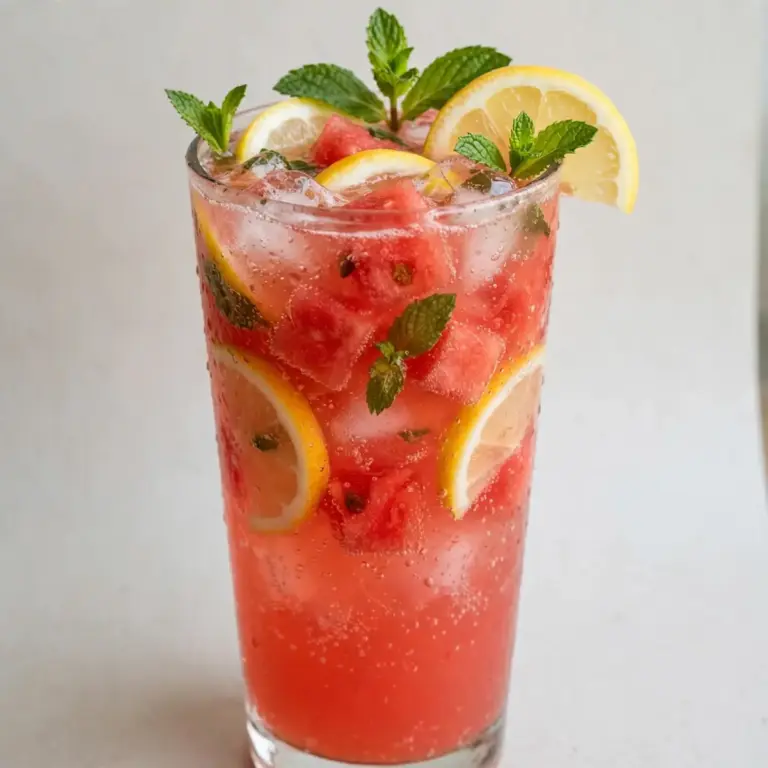
Watermelon Lemonade
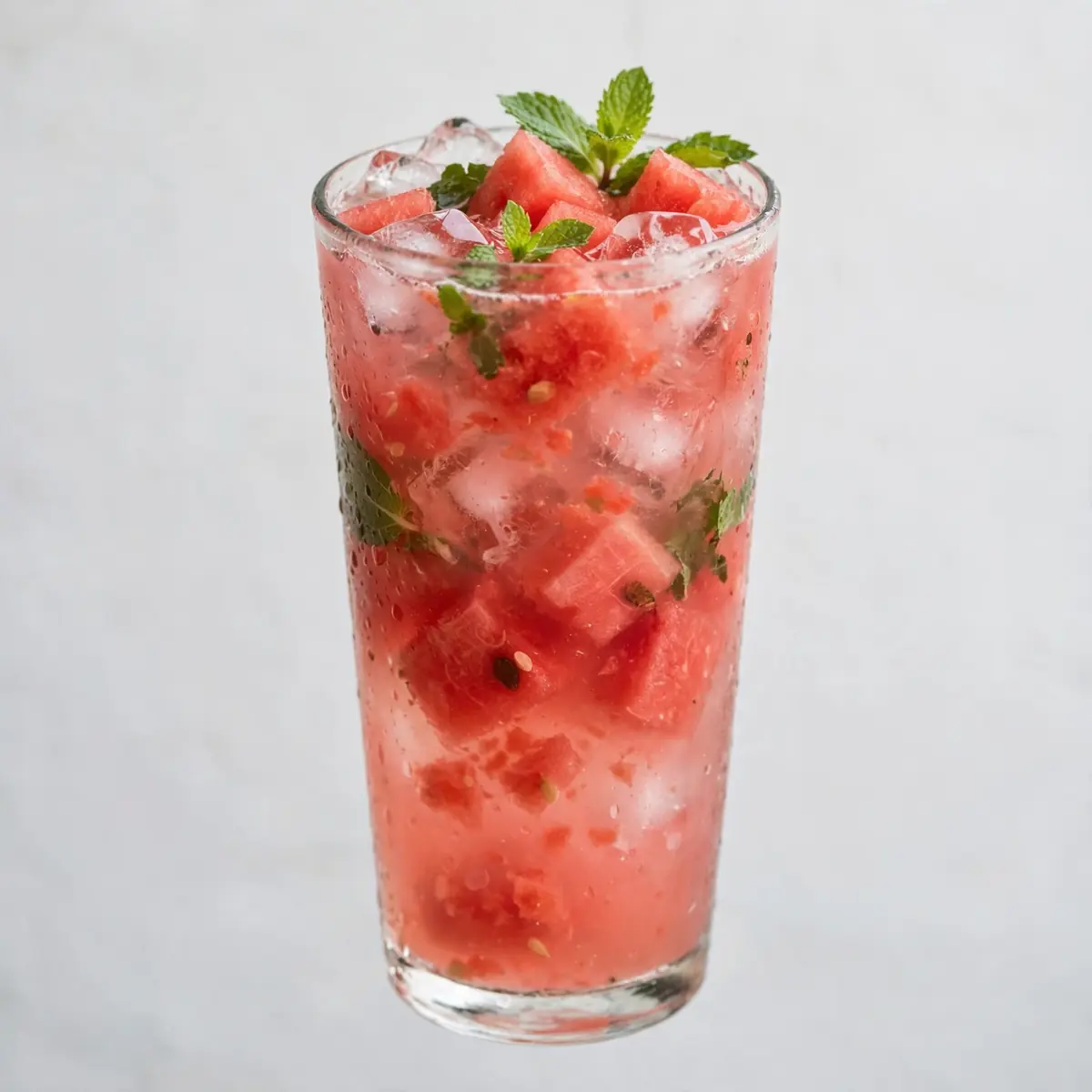
There are some weekends that call for a project—not a chore, but a slow, deliberate kitchen ritual that fills the house with a perfume so bright it lifts the spirits before the first sip is even taken. This watermelon lemonade is just that: a cosy Saturday afternoon immersion into the scent of warm citrus and sweet melon, a chance to slow the clock and make something that tastes of pure, unhurried summer. I stumbled upon this combination by accident, and it’s been a hit ever since.
Recipe Overview
- Prep Time: 25 minutes
- Cook Time: 10 minutes (for the syrup)
- Total Time: 1 hour 5 minutes (including 30 minutes chilling)
- Servings: 4 generous glasses
- Difficulty: Easy
Why You’ll Love This Watermelon Lemonade
- The aroma alone is worth it. As you simmer the lemons and sugar, your kitchen fills with a fragrant steam that smells like a sun-warmed orchard—a subtle, grounding pleasure that no shop-bought bottle can replicate.
- It’s a sensory, hands-on process. You feel the give of a ripe watermelon under your palm, you hear the gentle pop of lemon zest releasing its oils into the syrup, and you watch the colour shift from pale pink to a deep, sunset rouge. This is cooking as a mindful practice.
- Perfectly balanced sweetness. The natural sugar of the watermelon meets the sharp, clean bite of fresh lemons, and the simple syrup ties it all together without ever becoming cloying. It’s a drink that refreshes rather than overwhelms.
- It gets better as it rests. Unlike many drinks that fade, this one deepens in flavour after a few hours in the fridge. The melon and citrus marry overnight, making it a wonderful make-ahead treat for a quiet weekend.
- A canvas for your own touch. Once you have the base, you can add a sprig of mint, a slice of ginger, or even a pinch of salt to play with the flavour profile. It’s a foundation, not a final decree.
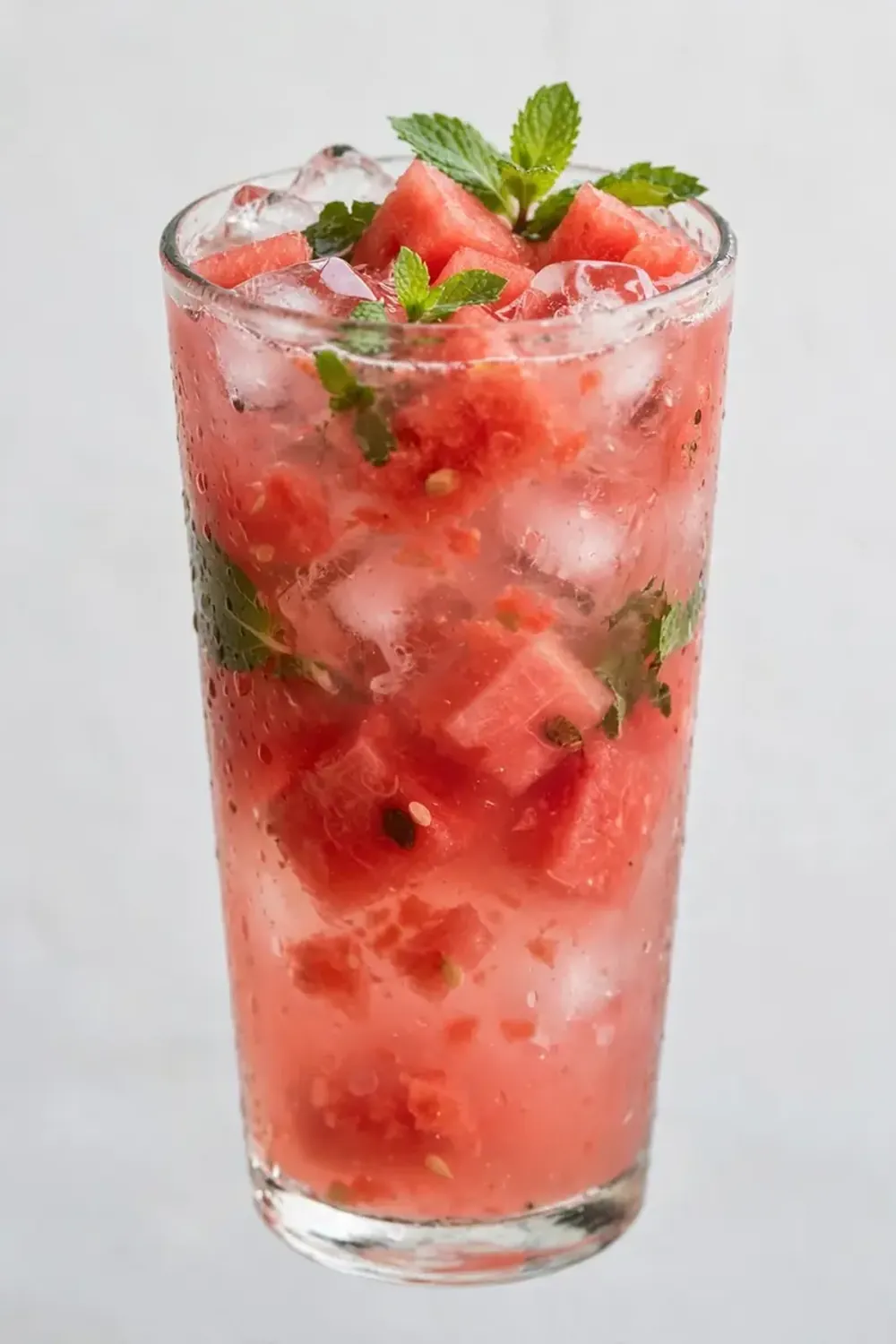
Ingredients You’ll Need
- 1 medium watermelon (about 2 kg) – the ripest, most fragrant you can find
- 4 large, unwaxed lemons (plus 1 extra for garnish)
- 150 g caster sugar
- 250 ml water (for the syrup)
- 500 ml cold water (to dilute)
- Ice cubes, as needed
- Small handful of fresh mint leaves (optional, but lovely)
- Pinch of sea salt (optional, to heighten the sweetness)
Tip: For the most vibrant colour, choose a watermelon that feels heavy for its size and has a creamy yellow spot on the rind—this indicates it ripened on the vine. Unwaxed lemons are crucial here because we use the zest directly in the syrup, and you want that bright, natural oil without any chemical coating.
How to Make Watermelon Lemonade
- Make the lemon syrup. Using a vegetable peeler, peel the zest from 3 of the lemons in wide strips, being careful to avoid the white pith, which will add a bitter, chalky note. Place the zest strips in a small saucepan with the caster sugar and 250 ml of water. Set the pan over a medium heat and stir gently until the sugar dissolves completely—you will see the liquid turn from cloudy to completely clear, and the air will fill with a sharp, sweet citrus perfume. Bring it to a gentle simmer, then reduce the heat to low and let it bubble softly for 8 minutes. The syrup will thicken slightly and take on a pale golden hue. Remove from the heat and let it cool completely in the pan; the zest will continue to infuse the syrup.
- Prepare the watermelon. While the syrup cools, cut the watermelon in half. Use a large spoon to scoop the flesh into a bowl, working around the seeds as best you can. You should have about 1 kg of flesh. Working in batches, place the watermelon in a blender and blitz on high for 30 seconds, until it becomes a smooth, frothy liquid. You will see a light pink foam form on top. Pour the puree through a fine-mesh sieve into a large jug, pressing gently on the solids with the back of a spoon to extract every last drop of juice. Discard the pulp. You should have about 600–700 ml of pure juice, a vivid, almost neon pink.
- Juice the lemons. Roll the 3 zested lemons (plus the 1 extra lemon) firmly on the countertop under your palm to break the internal membranes—this helps release more juice. Cut them in half and juice them into a small bowl. You need about 120 ml of fresh lemon juice. The colour should be a bright, sunny yellow, and the smell should be tart enough to make your mouth water.
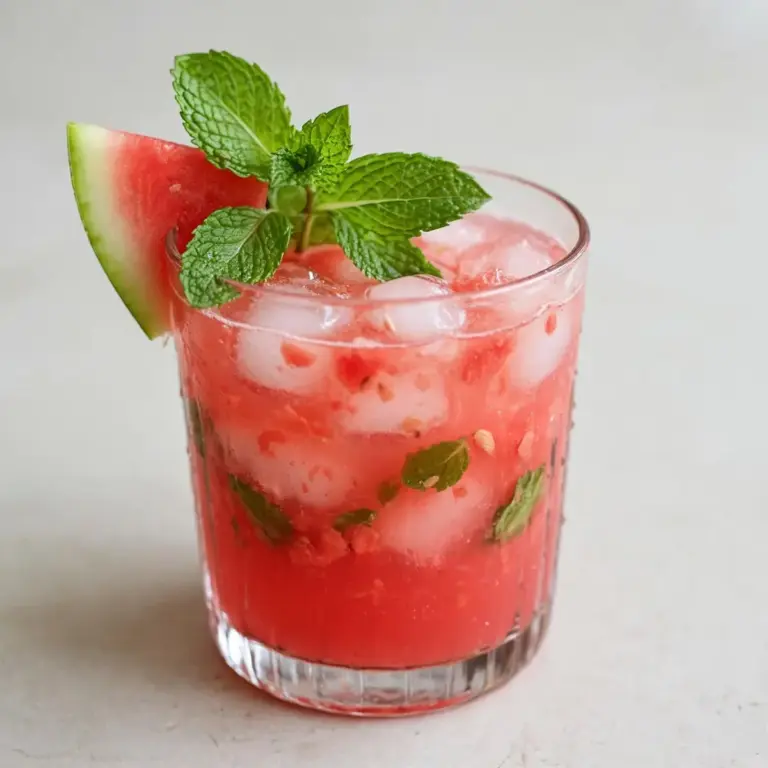
- Combine the base. In a large pitcher, whisk together the watermelon juice, the fresh lemon juice, and the cooled lemon syrup (discard the zest strips first). The mixture will be a deep, rosy coral. Add the 500 ml of cold water and stir gently. Taste the lemonade at this point—it should be sweet, tart, and intensely fruity. If it feels too concentrated, add another 50–100 ml of cold water.
- Chill and rest. Cover the pitcher and place it in the refrigerator for at least 30 minutes. During this time, the flavours will meld and soften. The colour will deepen slightly, and the sugar from the syrup will fully integrate into the liquid, creating a smooth, unified body.
- Serve with ceremony. Fill four tall glasses with ice cubes. Pour the chilled lemonade over the ice, leaving about 2 cm of space at the top. Garnish each glass with a thin slice of lemon and a sprig of fresh mint, if using. The mint adds a cool, herbaceous note that lifts the drink beautifully. Serve immediately, and watch the condensation bead on the glass.
Tips From My Kitchen
- Use a fine-mesh sieve, not a colander. A colander lets too much fibrous pulp through, which creates a murky, gritty texture in the final drink. A fine-mesh sieve (or even a piece of muslin cloth) catches every bit of seed and stringy flesh, leaving you with a silky, jewel-bright juice that feels luxurious on the tongue.
- Strain the watermelon juice twice for clarity. After the first pass through the sieve, you will notice a thin layer of sediment settling at the bottom of the jug. Pour the juice through a clean sieve a second time, and this sediment will be caught. The result is a brilliantly clear, almost translucent pink liquid that looks stunning in the glass and has a cleaner mouthfeel.
- Don’t skip cooling the syrup. If you pour hot syrup directly into the watermelon juice, the heat will dull the fresh, raw flavour of the melon and can even cause the juice to separate slightly. Let the syrup cool to room temperature (or even chill it in the fridge for 10 minutes) before combining. You want the ingredients to meet as equals, not for one to overwhelm the other.
- Adjust the sweetness to the watermelon. Not all watermelons are created equal. Some are intensely sweet, others are more watery and mild. Taste a small piece of your watermelon before you start. If it’s very sweet, reduce the sugar in the syrup to 120 g. If it’s a bit bland, keep the full 150 g. Your palate is the best guide—trust it.
- Make the syrup a day ahead. The lemon syrup can be made up to 3 days in advance and stored in a sealed jar in the fridge. This actually improves the flavour, as the lemon zest continues to infuse the syrup with its essential oils. When you are ready to make the lemonade on a quiet Sunday, you only need to juice the lemons and blend the watermelon, which makes the process feel even more relaxed and effortless.
- Use a serrated knife for the watermelon. A straight-edged blade will crush the soft flesh and cause it to weep juice prematurely. A serrated knife (like a bread knife) cuts through the rind and flesh cleanly, preserving the structure of the melon and preventing a sticky mess on your chopping board.
What to Serve With Watermelon Lemonade
- This lemonade is a beautiful partner to something rich and chocolatey, like the Fudgy Small Batch Brownies With Crunchy Nuts – the tartness cuts through the dense cocoa beautifully.
- For a lighter touch, a plate of Strawberry Cheesecake Ritz Crackers For Parties provides a salty-sweet contrast that makes the lemonade taste even more vibrant.
- If you are in the mood for a full afternoon tea spread, serve it alongside the Simple 3 Ingredient Banana Bread For Easy Baking – the banana’s natural sweetness and the lemonade’s citrus tang are a classic pairing.
- A bowl of grilled halloumi with a drizzle of honey is also a wonderful savoury companion, as the salty cheese and the sweet-tart drink create a lovely balance on the palate.
Frequently Asked Questions
Watermelon Lemonade
Ingredients
Method
- Make the lemon syrup. Using a vegetable peeler, peel the zest from 3 of the lemons in wide strips, being careful to avoid the white pith, which will add a bitter, chalky note. Place the zest strips in a small saucepan with the caster sugar and 250 ml of water. Set the pan over a medium heat and stir gently until the sugar dissolves completely—you will see the liquid turn from cloudy to completely clear, and the air will fill with a sharp, sweet citrus perfume. Bring it to a gentle simmer, then reduce the heat to low and let it bubble softly for 8 minutes. The syrup will thicken slightly and take on a pale golden hue. Remove from the heat and let it cool completely in the pan; the zest will continue to infuse the syrup.
- Prepare the watermelon. While the syrup cools, cut the watermelon in half. Use a large spoon to scoop the flesh into a bowl, working around the seeds as best you can. You should have about 1 kg of flesh. Working in batches, place the watermelon in a blender and blitz on high for 30 seconds, until it becomes a smooth, frothy liquid. You will see a light pink foam form on top. Pour the puree through a fine-mesh sieve into a large jug, pressing gently on the solids with the back of a spoon to extract every last drop of juice. Discard the pulp. You should have about 600–700 ml of pure juice, a vivid, almost neon pink.
- Juice the lemons. Roll the 3 zested lemons (plus the 1 extra lemon) firmly on the countertop under your palm to break the internal membranes—this helps release more juice. Cut them in half and juice them into a small bowl. You need about 120 ml of fresh lemon juice. The colour should be a bright, sunny yellow, and the smell should be tart enough to make your mouth water.
- Combine the base. In a large pitcher, whisk together the watermelon juice, the fresh lemon juice, and the cooled lemon syrup (discard the zest strips first). The mixture will be a deep, rosy coral. Add the 500 ml of cold water and stir gently. Taste the lemonade at this point—it should be sweet, tart, and intensely fruity. If it feels too concentrated, add another 50–100 ml of cold water.
- Chill and rest. Cover the pitcher and place it in the refrigerator for at least 30 minutes. During this time, the flavours will meld and soften. The colour will deepen slightly, and the sugar from the syrup will fully integrate into the liquid, creating a smooth, unified body.
- Serve with ceremony. Fill four tall glasses with ice cubes. Pour the chilled lemonade over the ice, leaving about 2 cm of space at the top. Garnish each glass with a thin slice of lemon and a sprig of fresh mint, if using. The mint adds a cool, herbaceous note that lifts the drink beautifully. Serve immediately, and watch the condensation bead on the glass.
Notes
I make this at least once a week – it’s become a family favourite. I hope this recipe becomes a gentle, joyful part of your own weekend rhythm. If you give it a try, I would love to hear how it turned out for you—did you add a personal twist? Did the aroma fill your kitchen just as you hoped? Leave a comment below and tell me all about it.