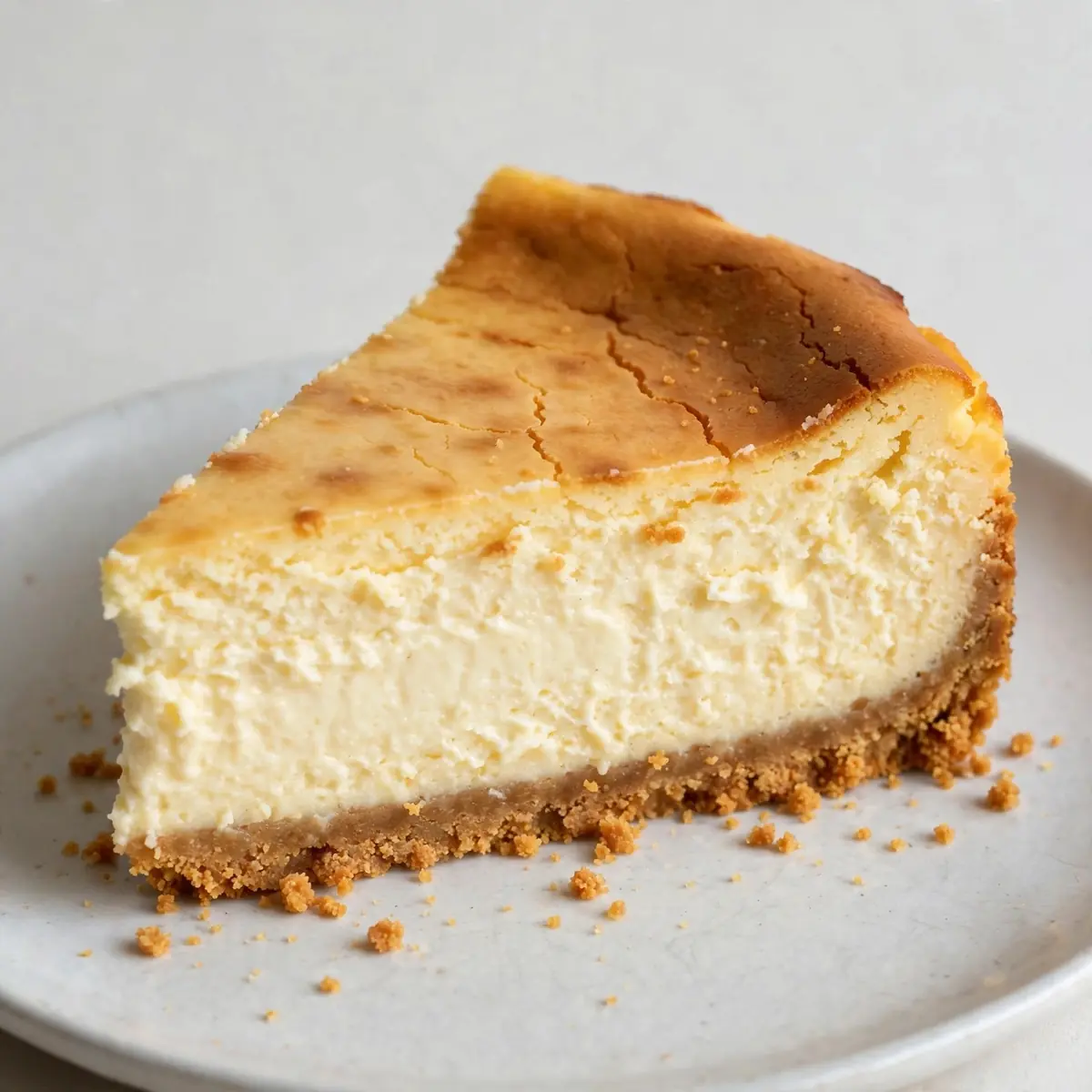
Ingredients
Method
- Prepare the base. Preheat your oven to 160°C (140°C fan). Crush the digestive biscuits into fine crumbs – I find a sealed freezer bag and a rolling pin wonderfully therapeutic for this. Mix the crumbs with the melted butter and 1 tablespoon of sugar until it resembles damp sand. Press this mixture firmly into the base of your parchment-lined springform tin. The smell of warm, buttery biscuits will soon fill your kitchen. Bake for 10 minutes, then set aside to cool.
- Wrap the tin. This is crucial to prevent leaks. Take three large sheets of strong foil and wrap them tightly around the outside of the springform tin, bringing them up the sides. Place the wrapped tin into your large roasting tin.
- Make the filling. In a large bowl, beat the room-temperature cream cheese with an electric mixer on a low speed until it's completely smooth and has a silky, uniform sheen. There should be no lumps at all. Add the 200g of sugar, the flour, vanilla extract, and lemon zest. Mix on low until just combined – you want to avoid incorporating too much air. The batter will look glossy and smell wonderfully fragrant.
- Add the eggs. Add the whole eggs and egg yolks one at a time, mixing on the lowest setting after each addition until just incorporated. The batter will become thicker and a pale, creamy yellow. Finally, gently fold in the double cream by hand until the mixture is smooth, thick, and perfectly homogenous. Give the bowl a good scrape down.
- Pour and bake in a water bath. Pour the filling onto the cooled biscuit base. Gently smooth the top with a spatula. Boil a kettle of water. Place the roasting tin with the cheesecake onto the oven shelf, then carefully pour the hot water into the roasting tin until it reaches halfway up the sides of the springform tin. This steamy environment is the secret to a crack-free top. Bake for 1 hour 15 minutes to 1 hour 30 minutes. The edges will be set and a pale golden colour, but the centre should still have a noticeable jiggle, like a firm jelly. The aroma of baked cream and vanilla will be intoxicating.
- Cool slowly. This is the hardest part. Turn the oven off and leave the cheesecake inside with the door slightly ajar for a full hour. This gentle cooling prevents the top from sinking. After an hour, remove the cheesecake from the water bath and foil, run a thin knife around the edge of the tin to release the cake, and let it cool completely on a wire rack. The top will settle into a perfectly flat, smooth surface.
- Chill overnight. Once the cheesecake is at room temperature, cover it loosely with cling film and refrigerate for at least 6 hours, but ideally overnight. My husband, who's usually picky, asked for seconds the first time I made this, and the overnight chill was the secret. The texture will become firm, sliceable, and impossibly creamy.
Notes
Ensure all dairy ingredients are at room temperature to avoid lumps. The water bath is essential for preventing cracks. For best results, chill overnight before serving.