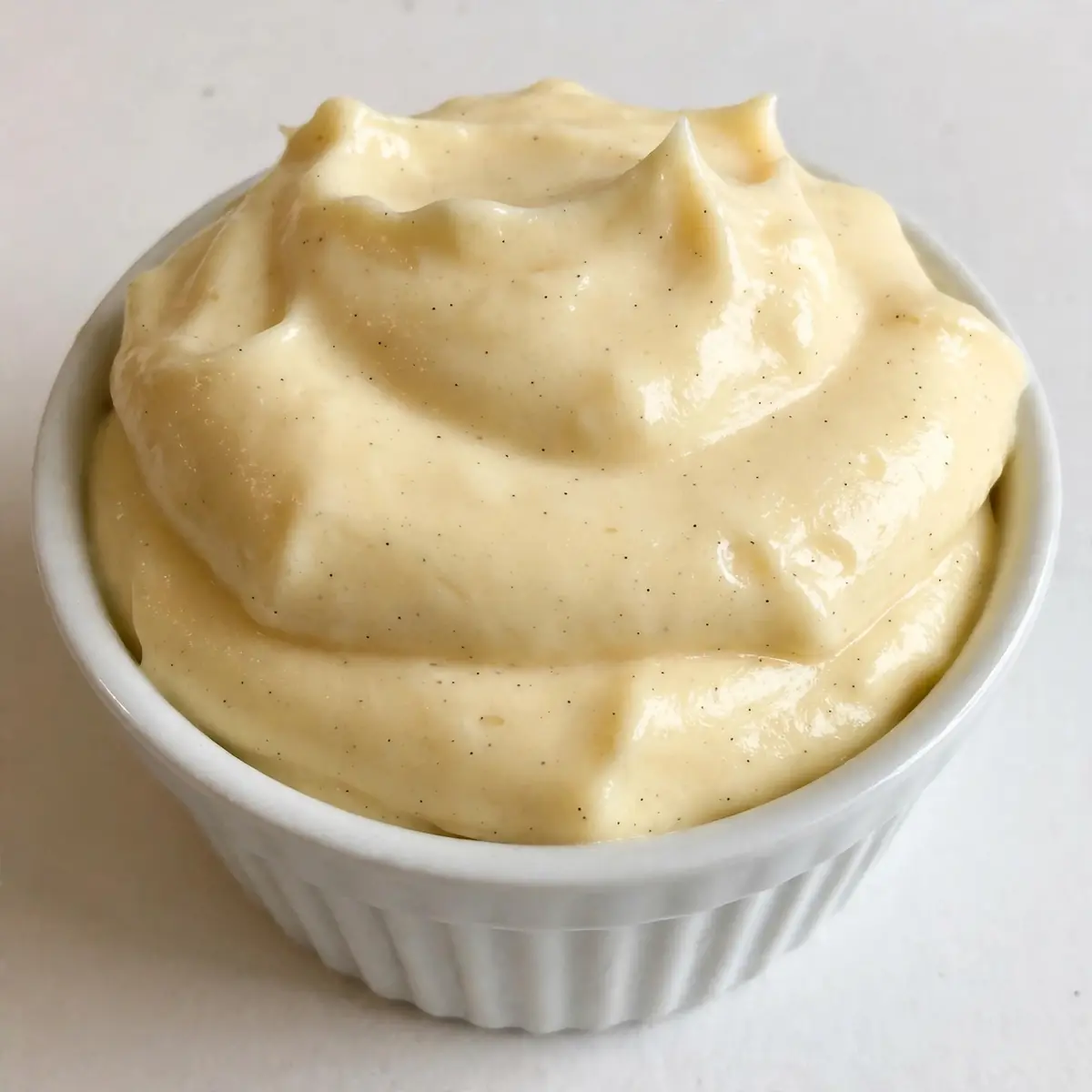
Ingredients
Method
- Prepare your base: In a medium, heavy-bottomed saucepan, whisk together the caster sugar, cornflour, and a pinch of salt. Feel the mixture between your fingers — it should be fine and powdery, with no lumps. Slowly pour in about 100ml of the cold milk, whisking constantly until you have a smooth, pale slurry.
- Add the remaining milk and vanilla: Pour in the rest of the milk in a steady stream, whisking all the while. Drop in the split vanilla pod (or stir in the vanilla bean paste). Set the pan over a medium heat. You'll hear a gentle hiss as the pan warms up — that's your cue to start paying attention.
- Temper the egg yolks: While the milk mixture heats, place the egg yolks in a medium bowl and whisk them until they're pale and slightly thickened, about 30 seconds. Once the milk mixture is steaming but not bubbling (around 70°C if you're using a thermometer), slowly ladle about 120ml of the hot milk into the yolks, whisking constantly. This step prevents the yolks from scrambling.
- Combine and thicken: Pour the tempered yolk mixture back into the saucepan, whisking steadily. Return the pan to medium heat and switch to a wooden spoon. Stir constantly, scraping the bottom and corners of the pan. After 3-4 minutes, you'll feel the mixture start to resist your spoon — it will become noticeably thicker, and you'll see lazy bubbles breaking the surface. The pudding should coat the back of your spoon thickly, and a finger drawn through it should leave a clean trail.
- Finish with butter: Once the pudding has thickened (about 5-6 minutes total cooking time after adding the eggs), remove the pan from the heat immediately. Fish out the vanilla pod — rinse it, dry it, and bury it in a jar of sugar for future use. Drop in the cubed butter and the teaspoon of vanilla extract. Stir until the butter has melted completely and the pudding looks glossy and smooth.
- Strain for silkiness: Set a fine-mesh sieve over a large heatproof bowl. Pour the hot pudding through the sieve, pressing gently with a spatula. This catches any tiny lumps or bits of cooked egg. The pudding that emerges should be absolutely smooth and shiny, with a fragrance that fills your kitchen.
- Chill with care: Press a piece of cling film directly onto the surface of the pudding — this prevents a skin from forming. Poke a few tiny holes in the film with a toothpick so steam can escape. Refrigerate for at least 4 hours, or overnight. The pudding will firm up beautifully, turning from a pourable custard into a spoonable dessert with a gentle wobble.
Notes
For best results, use full-fat milk and a good quality vanilla extract. The pudding must chill for at least 4 hours or overnight to set properly. The vanilla pod can be rinsed, dried, and reused to make vanilla sugar.