Ingredients
Method
- Preheat your oven to 170°C (fan-assisted) or 180°C conventional. Grease six 150ml ramekins with butter or a light spray of oil. Place them in a deep baking dish — you'll add hot water later, so make sure the dish has sides at least 5cm high.
- Whisk the eggs and sugar together in a large mixing bowl until the mixture turns pale and thick, about 2 minutes. You'll see ribbons of batter fall from the whisk — that's your cue it's aerated enough.
- Add the cottage cheese, lemon juice, lemon zest, and vanilla. Whisk vigorously for a full minute. The batter will look slightly curdled at first — that's just the cottage cheese breaking down. Keep going until it's smooth and smells intensely of fresh lemon.
- Sift the flour and salt over the wet mixture. Fold gently with a spatula until no white streaks remain. The batter should be thin enough to pour easily, with a silky, glossy sheen on the surface.
- Divide the batter evenly among the greased ramekins. Tap each one gently on the worktop to release any trapped air bubbles. Pour boiling water from a kettle into the baking dish until it reaches halfway up the sides of the ramekins.
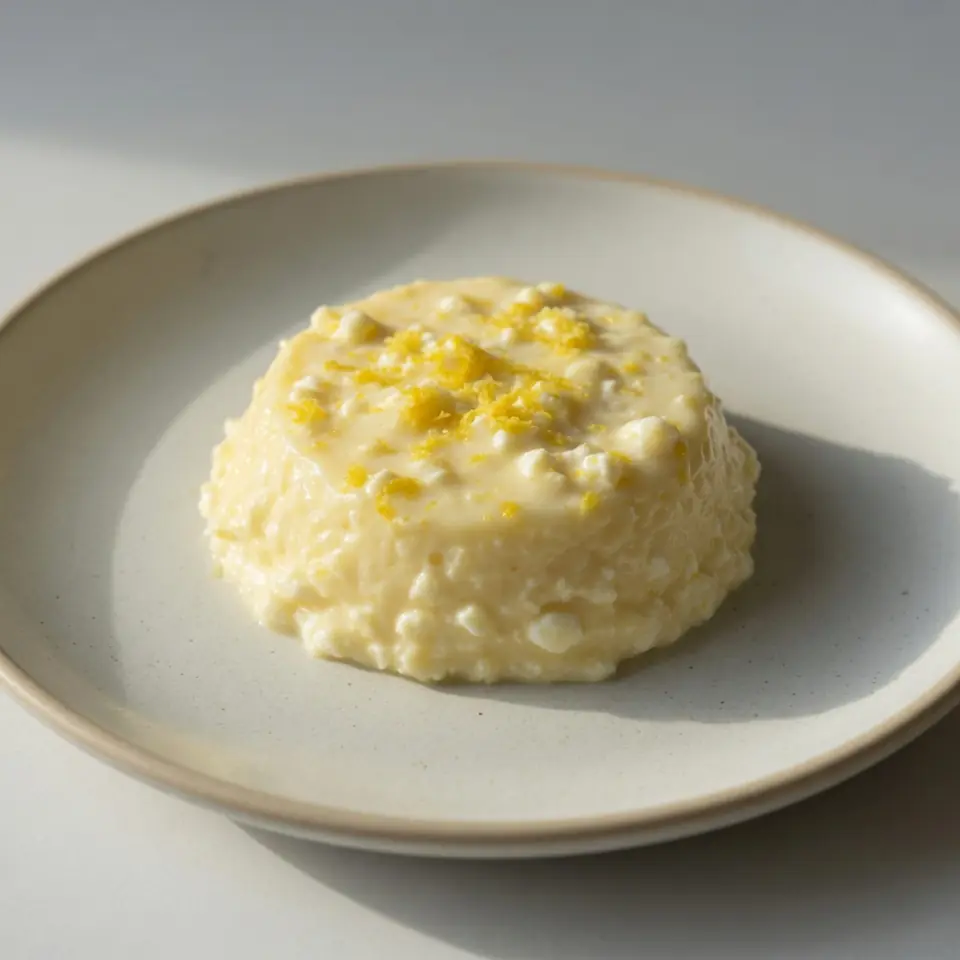
- Bake for 25–30 minutes until the tops are just set with a gentle wobble in the centre. The edges will be puffed and golden, and the kitchen will smell like lemon meringue pie. A skewer inserted 1cm from the edge should come out clean, but the middle should still jiggle slightly.
- Remove the ramekins from the water bath immediately using a sturdy spatula or tongs. Cool on a wire rack for 10 minutes, then refrigerate for at least 2 hours. The pudding firms up beautifully as it chills, transforming from a wobbly bake to a sliceable, creamy dessert.
Notes
For best results, ensure all ingredients are at room temperature. Use full-fat cottage cheese for a creamier texture. The pudding firms up after chilling, making it sliceable.