Ingredients
Method
- Make the biscuit base. Crush the digestive biscuits into fine crumbs—you want a texture like damp sand, with no large shards left. I pop them in a sealed bag and go at them with a rolling pin until I hear the satisfying crackle subside into silence. Stir in the melted butter until every crumb is coated and the mixture feels like wet sand when pressed between your fingers. Press this firmly into the base of a 9x13 inch baking dish, using the back of a spoon to compact it. The base should look even and dark, with no gaps. Pop it in the fridge to set while you make the custard.
- Whisk the egg yolks and sugar. In a medium bowl, whisk the egg yolks with the caster sugar until the mixture turns pale and thick, and when you lift the whisk, it leaves a ribbon-like trail on the surface for a second or two. This should take about 2 minutes of steady whisking.
- Prepare the custard base. In a saucepan, warm the milk and 300ml of the double cream over a medium heat. Do not let it boil—you are looking for small bubbles around the edge of the pan and a gentle steam rising. The smell will be warm and milky. Meanwhile, sprinkle the cornflour over the egg yolk mixture and whisk until smooth.
- Temper the eggs. Slowly pour the hot milk mixture into the egg yolk bowl, whisking constantly. I use a thin stream and keep whisking—this stops the eggs from scrambling. The mixture will look pale and thin at this point. Pour everything back into the saucepan.
- Cook the custard. Place the saucepan over a low heat and stir with a wooden spoon constantly. You are watching for the moment the mixture thickens enough to coat the back of the spoon—when you run your finger through it, the line should hold. This takes about 5–7 minutes. The texture will shift from watery to silky, and the colour will deepen slightly. Remove from the heat immediately.
- Add the chocolate. Tip the chopped dark chocolate into the hot custard and let it sit for 30 seconds. Then stir gently until it is fully melted and the custard turns a deep, glossy brown. The smell at this point is pure indulgence—rich, slightly bitter, utterly irresistible. Stir in the vanilla. Pour this chocolate custard over the chilled biscuit base, spreading it evenly. The surface should be smooth and shiny.
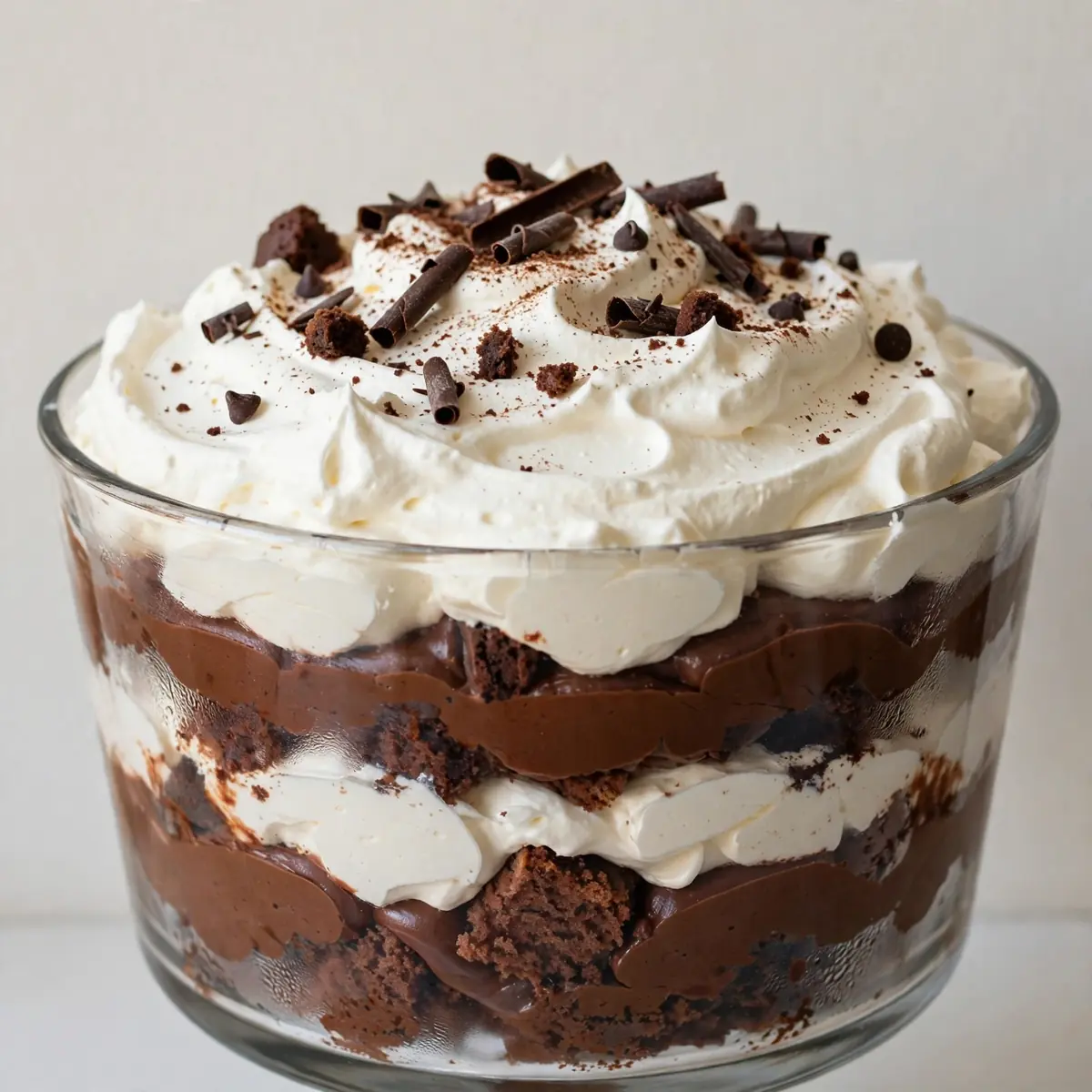
- Whip the topping. Pour the remaining 300ml of double cream into a chilled bowl. Whisk until soft peaks form—when you lift the whisk, the cream should hold a gentle peak that flops over slightly. Do not over-whip, or it will turn grainy. Spread the whipped cream over the cooled chocolate layer, creating soft swirls on the surface. Dust generously with cocoa powder.
- Chill and set. Cover the dish with aluminium foil and refrigerate for at least 4 hours, but overnight is far better. The texture firms up beautifully, and the flavours meld into one cohesive, creamy whole. When ready, the trifle should slice cleanly, with distinct layers visible.
Notes
Ensure the biscuit base is firmly compacted for a stable foundation. When tempering the eggs, pour the hot milk very slowly while whisking constantly to prevent scrambling. The custard will thicken significantly upon chilling. For best results, chill overnight to allow flavors to meld and the texture to firm up perfectly.