Quick Old-Fashioned Tapioca Pudding for Busy Weeknights
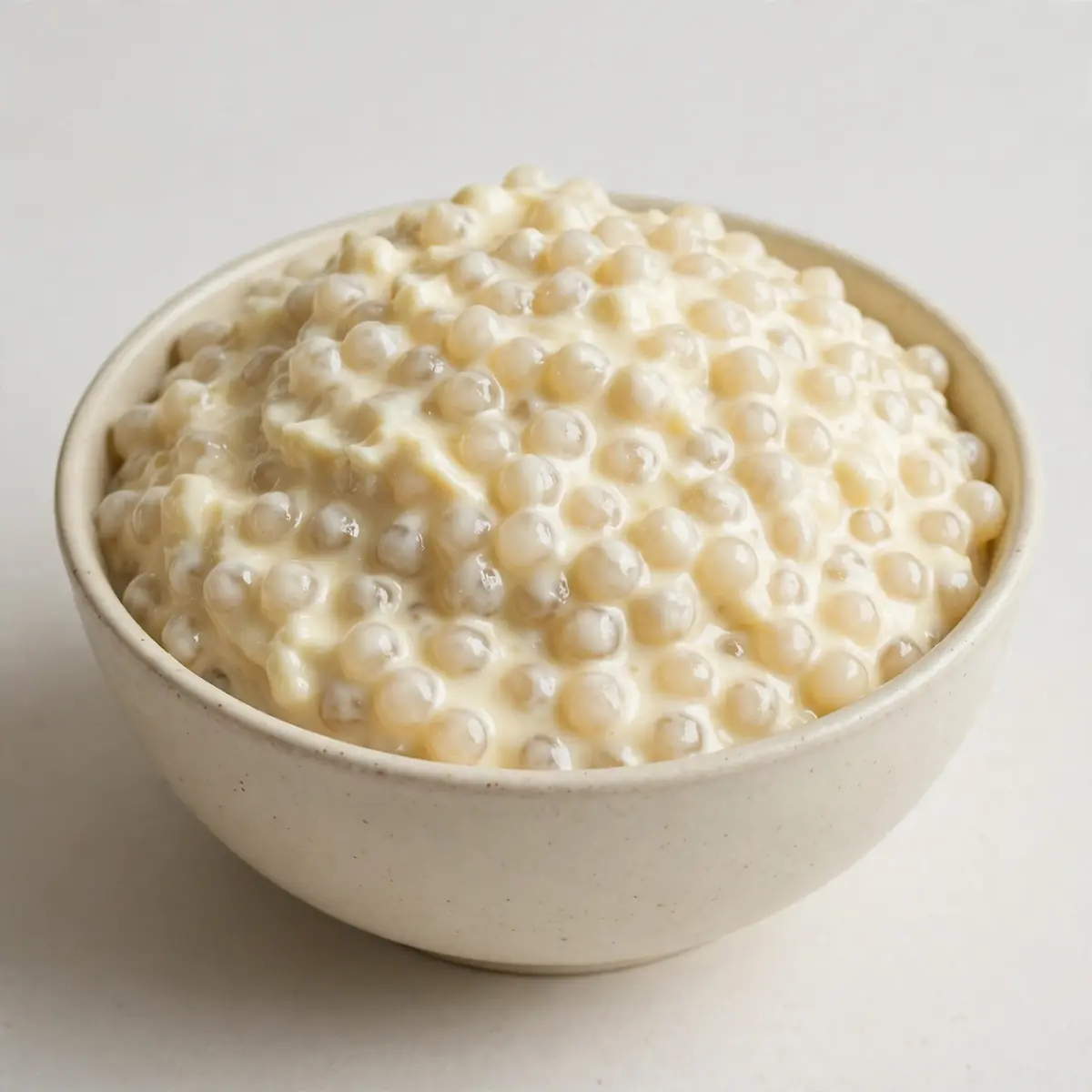
When the clock strikes six and the kids are already asking what’s for pudding, I turn to my old-fashioned tapioca pudding – it’s my weeknight secret weapon that goes from pantry to table in under thirty minutes with barely a whisk to wash up.
Recipe Overview
- Prep Time: 5 minutes
- Cook Time: 20 minutes
- Total Time: 25 minutes
- Servings: 4 generous portions
- Difficulty: Easy (no special skills needed)
Why You’ll Love This Old-Fashioned Tapioca Pudding
- Ready faster than a takeaway delivery: From the moment you grab the tapioca pearls to the first spoonful, you’re looking at about 25 minutes. That’s quicker than waiting for a pizza to arrive, and you control exactly what goes in.
- One pot, minimal washing up: Everything comes together in a single saucepan. No transferring between bowls, no extra baking dishes – just one pot and a wooden spoon to rinse. I make this at least once a week – it’s become a family favourite precisely because of the effortless cleanup.
- Make-ahead magic for busy evenings: You can prepare this pudding the night before and simply reheat portions as needed. It thickens beautifully in the fridge, and a quick stir over low heat brings it back to silky perfection.
- Budget-friendly ingredients you already have: Tapioca pearls, milk, sugar, eggs, and vanilla – that’s it. No fancy supermarket trips or expensive specialty items. This is my go-to recipe when I need something quick but impressive without breaking the weekly shop budget.
- Customisable for every family member: Serve it plain for the purists, top with fresh berries for a fruity twist, or drizzle with honey and cinnamon for a warming variation. Everyone can tailor their own bowl without extra cooking.
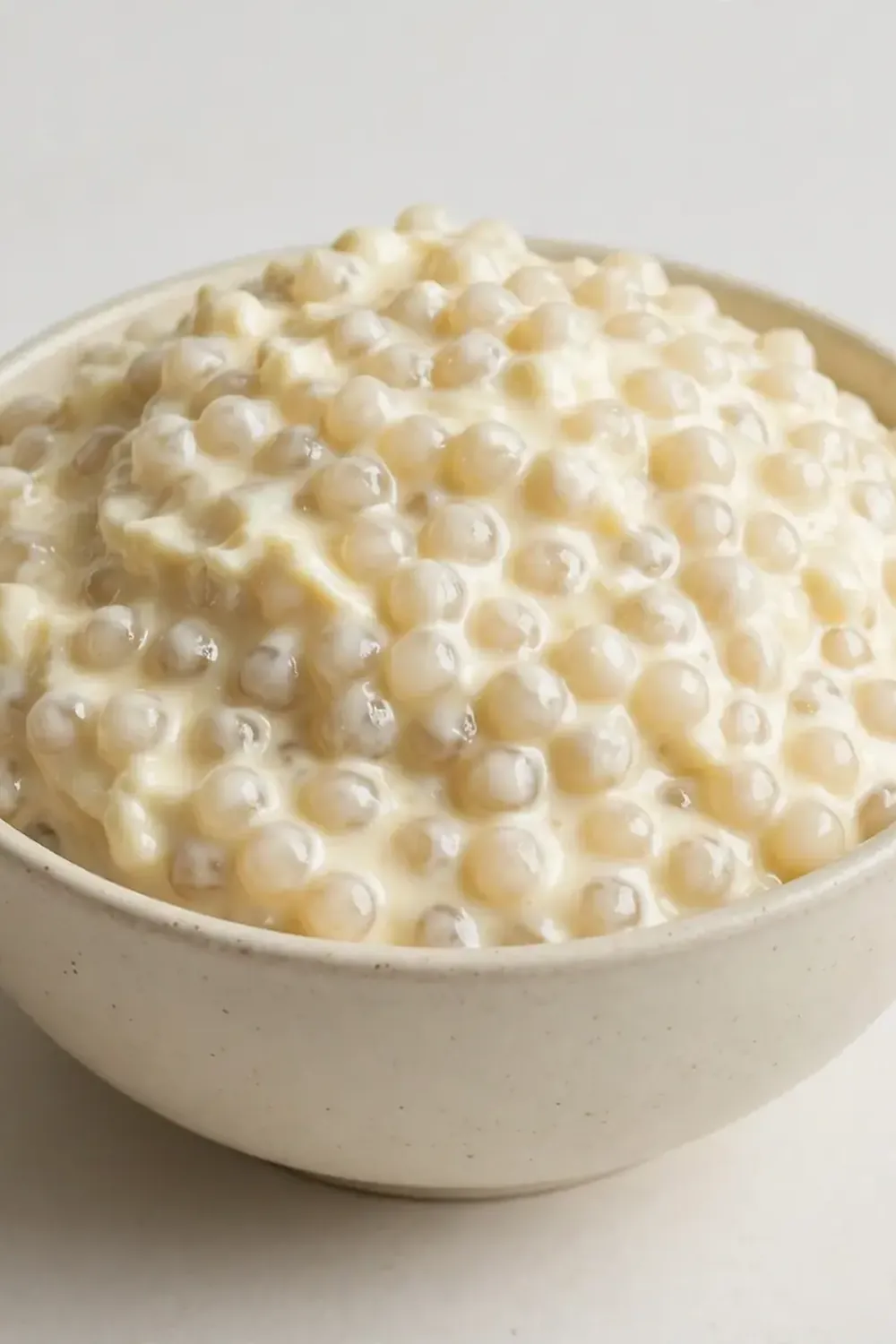
Ingredients You’ll Need
- 80g small pearl tapioca (not instant)
- 500ml whole milk
- 100ml double cream
- 2 large eggs
- 75g caster sugar
- 1 teaspoon vanilla extract
- Pinch of fine sea salt
- 250ml cold water (for soaking)
- Fresh berries or sliced peaches, to serve (optional)
- Ground cinnamon or nutmeg, for dusting (optional)
Tip: For the creamiest texture, use whole milk and double cream – lower-fat alternatives can make the pudding slightly watery and won’t give that luxurious mouthfeel we’re after. If you’re dairy-free, full-fat oat milk works well, though the texture will be slightly less rich.
Equipment You’ll Need
- Medium saucepan (about 2-litre capacity)
- Wooden spoon or silicone spatula
- Mixing bowl (small)
- Whisk
- Measuring cups and spoons
- Fine-mesh sieve (for rinsing tapioca)
How to Make Old-Fashioned Tapioca Pudding
- Soak the tapioca pearls: Place the small pearl tapioca in a bowl and cover with the 250ml of cold water. Let it sit for 10 minutes – you’ll notice the pearls begin to swell slightly and turn from opaque white to a translucent, milky appearance around the edges. This pre-soaking cuts the cooking time dramatically and ensures every pearl softens evenly.
- Start the milk base: Pour the whole milk and double cream into your medium saucepan. Drain the soaked tapioca through a fine-mesh sieve and add the pearls directly to the milk. Place the pan over medium heat and stir gently with your wooden spoon. After about 3 minutes, you’ll see small bubbles forming around the edges of the pan – that’s your cue that the milk is heating but not yet boiling.
- Simmer the pearls: Lower the heat to medium-low and continue stirring every minute or so. The mixture will gradually thicken, and after 10 minutes the pearls will become fully translucent with just a tiny white speck at the centre. The liquid will have a creamy, slightly glossy sheen, and you’ll hear a soft bubbling sound as it simmers gently.
- Temper the eggs: While the tapioca simmers, crack the two eggs into a small mixing bowl and add the caster sugar. Whisk vigorously until the mixture turns a pale yellow colour and becomes thick enough to leave a ribbon trail on the surface when you lift the whisk – this takes about 1 minute of steady whisking.
- Combine carefully: Slowly pour about 120ml of the hot tapioca mixture into the egg mixture, whisking constantly as you pour. This gradual warming prevents the eggs from scrambling. You’ll see the mixture become smooth and uniform in colour – no streaks of egg remaining.
- Finish the pudding: Pour the tempered egg mixture back into the saucepan with the remaining tapioca. Return the pan to low heat and stir continuously for 3 to 4 minutes. The pudding will thicken noticeably, coating the back of your wooden spoon in a smooth, velvety layer. When you run your finger through the coating on the spoon, the line should hold without the pudding running back together. Stir in the vanilla extract and the pinch of salt.
- Cool and serve: Remove the pan from the heat. The pudding will look slightly loose at this stage – don’t worry, it will continue to thicken as it cools. Pour it into serving bowls or a single large dish. The surface should be smooth and glossy, with tiny vanilla specks throughout. Serve warm for a comforting weeknight dessert, or refrigerate for at least 2 hours for a firmer, chilled pudding that slices cleanly with a spoon.
Tips From My Kitchen
- Never skip the soaking step, even if you’re in a rush: Small pearl tapioca needs that 10-minute soak to hydrate the outer layers. Without it, you’ll end up with hard, gritty centres surrounded by mushy exteriors. Set a timer – it’s a short wait that makes the difference between creamy perfection and disappointing texture.
- Stir from the bottom, not just the surface: Tapioca pearls love to sink and stick to the pan’s base. Use a flat-edged wooden spoon and scrape along the bottom with each stir. You’ll hear a gentle scraping sound when you’re doing it correctly – if you hear silence, lift and check for sticking immediately.
- Low and slow wins the silky texture race: Cooking over medium-high heat might seem faster, but it will curdle the milk and scramble the eggs. Keep the flame at medium-low throughout. The mixture should steam gently with occasional small bubbles – never a rolling boil. The smell should be sweet and milky, not scorched.
- Make it ahead for effortless serving: Prepare the pudding up to two days in advance and store it covered in the refrigerator. The texture will become firmer and almost sliceable. To reheat, add a splash of milk and stir over low heat, breaking up the set pudding with your spoon. It will return to a creamy consistency within 3 to 4 minutes, and you’ll see the surface become glossy again as it warms.
- Scale up or down with confidence: This recipe halves beautifully for a smaller family or doubles for a larger gathering. The key is maintaining the ratio – for every 20g of tapioca, use 125ml of milk and cream combined. If you’re doubling, expect the cooking time to increase by only 2 to 3 minutes, as the larger volume takes slightly longer to heat through.
- Rescue a lumpy pudding: If you accidentally overcook and the pudding becomes lumpy or slightly grainy, don’t throw it away. Whisk in 2 tablespoons of cold milk and blend briefly with an immersion blender. The texture won’t be as silky as the original, but it will be perfectly edible and still delicious – a lesson I learned after a few rushed weekday evenings.
What to Serve With Old-Fashioned Tapioca Pudding
- A handful of fresh raspberries or sliced strawberries for a tart contrast
- A drizzle of honey or maple syrup for extra sweetness
- A sprinkle of toasted coconut flakes for crunch
- A dollop of whipped cream and a dusting of cinnamon
- Crumbled digestive biscuits or shortbread for texture
For a complete weeknight dessert spread, this pudding pairs wonderfully with the No Bake Peach Cobbler Cheesecake Cups Recipe 2 for a fruity, no-fuss alternative, or the Creamy No Bake Strawberry Cheesecake For Two when you’re catering for a smaller crowd.
Still hungry for ideas? You might also love The Best Old Fashioned Chili Recipe, Old Fashioned Beef Stew Comfort Food Recipe from our sister kitchens.
Frequently Asked Questions
Old-Fashioned Tapioca Pudding
Ingredients
Method
- Soak the tapioca pearls: Place the small pearl tapioca in a bowl and cover with the 250ml of cold water. Let it sit for 10 minutes – you'll notice the pearls begin to swell slightly and turn from opaque white to a translucent, milky appearance around the edges. This pre-soaking cuts the cooking time dramatically and ensures every pearl softens evenly.
- Start the milk base: Pour the whole milk and double cream into your medium saucepan. Drain the soaked tapioca through a fine-mesh sieve and add the pearls directly to the milk. Place the pan over medium heat and stir gently with your wooden spoon. After about 3 minutes, you'll see small bubbles forming around the edges of the pan – that's your cue that the milk is heating but not yet boiling.
- Simmer the pearls: Lower the heat to medium-low and continue stirring every minute or so. The mixture will gradually thicken, and after 10 minutes the pearls will become fully translucent with just a tiny white speck at the centre. The liquid will have a creamy, slightly glossy sheen, and you'll hear a soft bubbling sound as it simmers gently.
- Temper the eggs: While the tapioca simmers, crack the two eggs into a small mixing bowl and add the caster sugar. Whisk vigorously until the mixture turns a pale yellow colour and becomes thick enough to leave a ribbon trail on the surface when you lift the whisk – this takes about 1 minute of steady whisking.
- Combine carefully: Slowly pour about 120ml of the hot tapioca mixture into the egg mixture, whisking constantly as you pour. This gradual warming prevents the eggs from scrambling. You'll see the mixture become smooth and uniform in colour – no streaks of egg remaining.
- Finish the pudding: Pour the tempered egg mixture back into the saucepan with the remaining tapioca. Return the pan to low heat and stir continuously for 3 to 4 minutes. The pudding will thicken noticeably, coating the back of your wooden spoon in a smooth, velvety layer. When you run your finger through the coating on the spoon, the line should hold without the pudding running back together. Stir in the vanilla extract and the pinch of salt.
- Cool and serve: Remove the pan from the heat. The pudding will look slightly loose at this stage – don't worry, it will continue to thicken as it cools. Pour it into serving bowls or a single large dish. The surface should be smooth and glossy, with tiny vanilla specks throughout. Serve warm for a comforting weeknight dessert, or refrigerate for at least 2 hours for a firmer, chilled pudding that slices cleanly with a spoon.
Notes
I hope this old-fashioned tapioca pudding becomes your new weeknight hero, just as it has in my kitchen. When the evening feels chaotic and you need something warm, creamy, and genuinely satisfying without the fuss, this recipe delivers every single time. Have you tried it yet? I’d love to hear how it worked for your family – drop a comment below and let me know your favourite topping combination.