Tangy Lemon Cottage Cheese Pudding Dessert
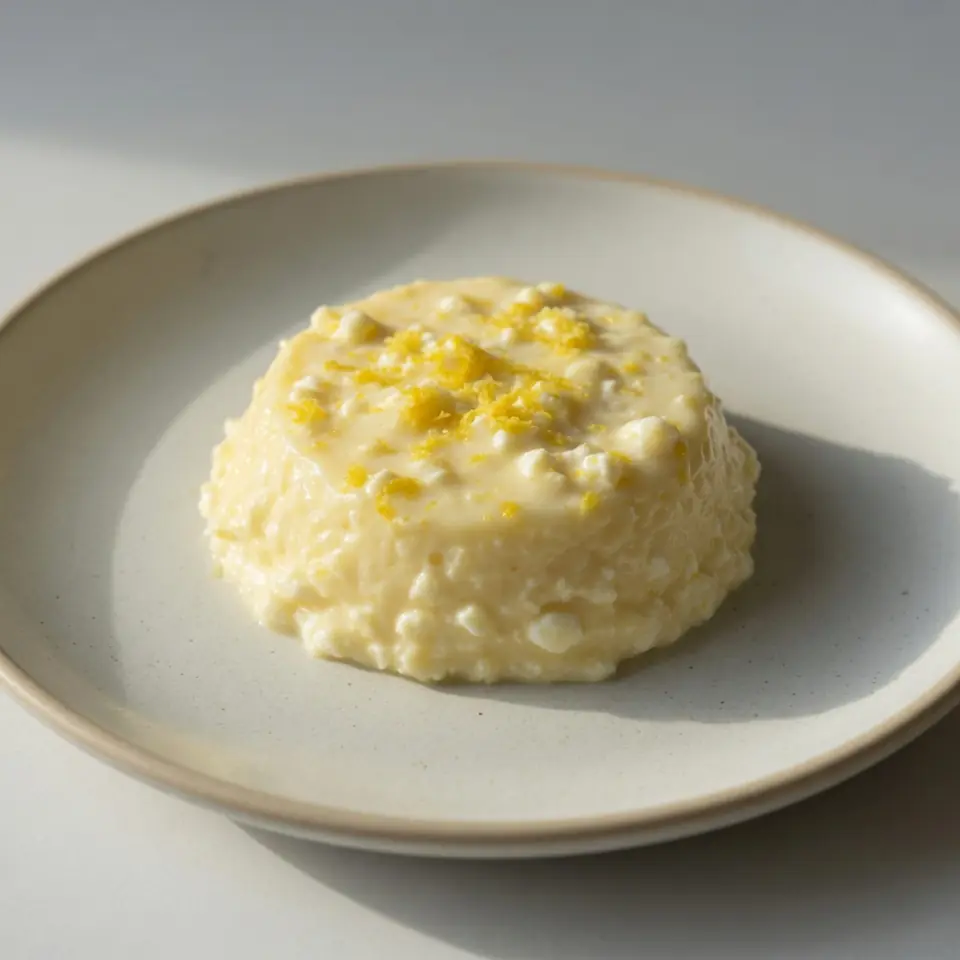
Last Tuesday, I had thirty minutes to turn a tub of cottage cheese and a shrivelling lemon into something my kids would actually eat before football practice. This Tangy Lemon Cottage Cheese Pudding Dessert came out of that frantic scramble, and now my eldest asks for it by name. It saves me on those evenings when takeaway feels tempting but the supermarket bill says otherwise.
Recipe Overview
- Prep time: 10 minutes
- Cook time: 25–30 minutes
- Total time: 40 minutes (plus 2 hours chilling, if you can wait)
- Servings: 6 small ramekins or 4 generous portions
- Difficulty: Beginner — one bowl, one whisk, no electric mixer needed
Why You’ll Love This Tangy Lemon Cottage Cheese Pudding Dessert
- One-bowl cleanup: You whisk everything in the same bowl, pour into ramekins, and bake. No food processor, no blender, no mountain of washing up.
- Protein-packed without protein powder: Cottage cheese does the heavy lifting here, giving you a dessert that keeps blood sugar steady and tummies full until breakfast.
- Make-ahead friendly: Prep the batter the night before, keep it covered in the fridge, and bake when you walk through the door the next evening.
- No fussy equipment: If you own a whisk, a mixing bowl, and six ramekins or an ovenproof dish, you’re ready. No bain-marie, no stand mixer, no silicone moulds.
- Kid-approved tang: The lemon cuts through the dairy richness, so even picky eaters who “don’t like cottage cheese” will ask for seconds.
Ingredients You’ll Need
- 500g full-fat cottage cheese (at room temperature)
- 3 large eggs (at room temperature)
- 120g caster sugar
- 60ml fresh lemon juice (about 2 large lemons)
- 1 tablespoon finely grated lemon zest
- 1 teaspoon vanilla bean paste or extract
- 30g plain flour (or cornflour for a gluten-free option)
- A pinch of fine sea salt
- Butter or oil spray for greasing ramekins
- Optional: icing sugar for dusting, fresh berries for serving
Tip: Full-fat cottage cheese gives a creamier texture. If you only have low-fat, the pudding will still work but may be slightly less luscious — add an extra tablespoon of flour to compensate.
How to Make Tangy Lemon Cottage Cheese Pudding Dessert
- Preheat your oven to 170°C (fan-assisted) or 180°C conventional. Grease six 150ml ramekins with butter or a light spray of oil. Place them in a deep baking dish — you’ll add hot water later, so make sure the dish has sides at least 5cm high.
- Whisk the eggs and sugar together in a large mixing bowl until the mixture turns pale and thick, about 2 minutes. You’ll see ribbons of batter fall from the whisk — that’s your cue it’s aerated enough.
- Add the cottage cheese, lemon juice, lemon zest, and vanilla. Whisk vigorously for a full minute. The batter will look slightly curdled at first — that’s just the cottage cheese breaking down. Keep going until it’s smooth and smells intensely of fresh lemon.
- Sift the flour and salt over the wet mixture. Fold gently with a spatula until no white streaks remain. The batter should be thin enough to pour easily, with a silky, glossy sheen on the surface.
- Divide the batter evenly among the greased ramekins. Tap each one gently on the worktop to release any trapped air bubbles. Pour boiling water from a kettle into the baking dish until it reaches halfway up the sides of the ramekins.
- Bake for 25–30 minutes until the tops are just set with a gentle wobble in the centre. The edges will be puffed and golden, and the kitchen will smell like lemon meringue pie. A skewer inserted 1cm from the edge should come out clean, but the middle should still jiggle slightly.
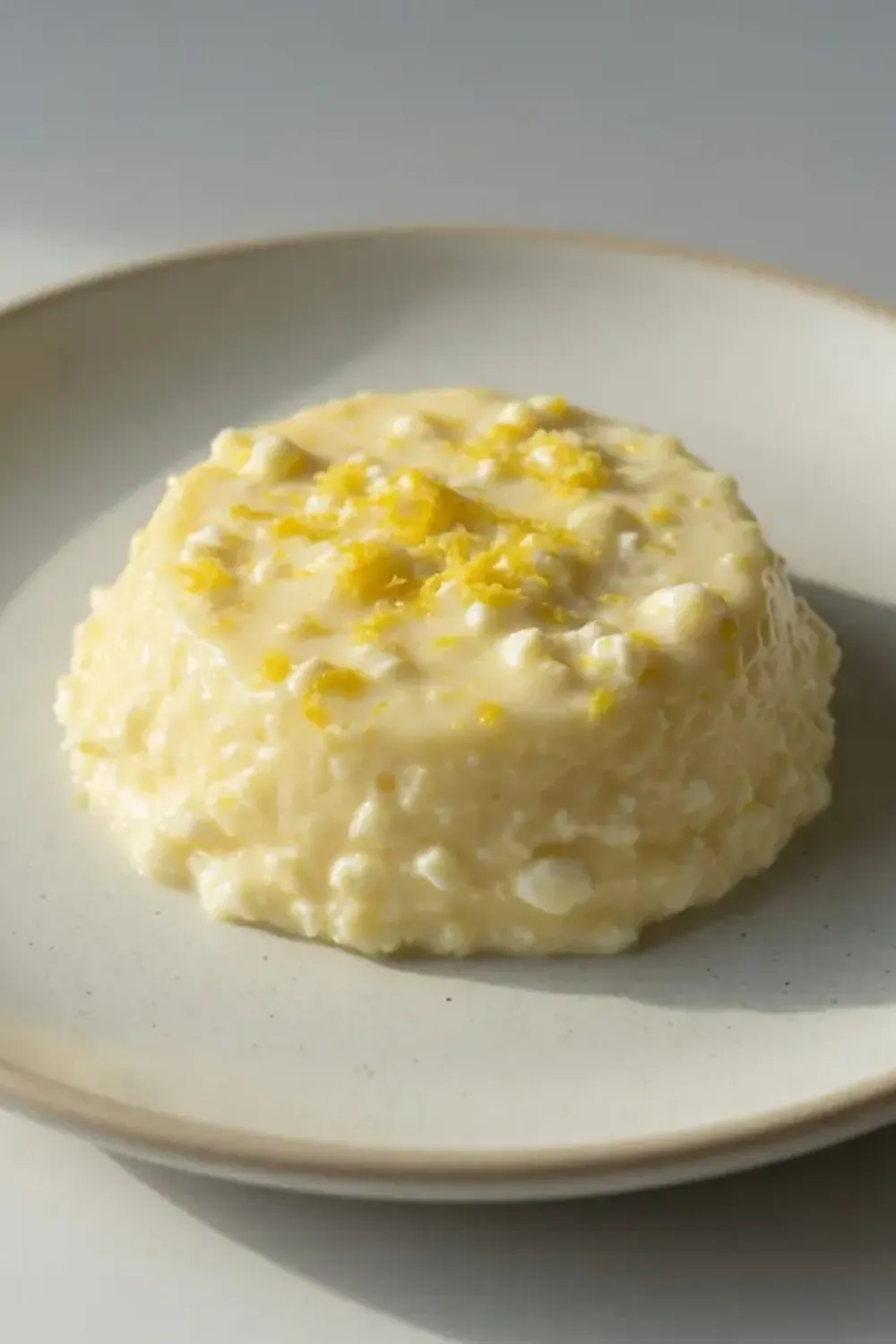
- Remove the ramekins from the water bath immediately using a sturdy spatula or tongs. Cool on a wire rack for 10 minutes, then refrigerate for at least 2 hours. The pudding firms up beautifully as it chills, transforming from a wobbly bake to a sliceable, creamy dessert.
Tips From My Kitchen
- Room temperature ingredients are non-negotiable here. Cold eggs and cold cottage cheese will make the batter seize up, and you’ll end up with a lumpy, uneven bake. Take everything out of the fridge 30 minutes before you start. If you forgot, place the eggs in a bowl of warm water for 5 minutes and microwave the cottage cheese in 10-second bursts on low power until it loses its chill.
- Don’t skip the water bath — it’s the secret to a silky texture. The gentle, even heat from the hot water stops the eggs from scrambling and prevents the dreaded rubbery rim. I once tried baking these without the water bath because I was in a hurry, and the puddings turned out with a tough, cracked top and a grainy interior. Never again.
- Strain the cottage cheese if you want an ultra-smooth pudding. Press it through a fine-mesh sieve with the back of a spoon before adding it to the batter. This removes the curd lumps entirely, leaving a velvety base. It adds 2 minutes to prep time, but the texture becomes almost cheesecake-like. This is my go-to method when I’m serving this to guests.
- Make the batter the night before for a genuinely quick weeknight dinner. Whisk everything together, pour into the greased ramekins, cover tightly with cling film, and refrigerate. The next evening, simply preheat the oven, add the water bath, and bake. This cuts your active evening time to about 5 minutes of hands-on work.
- Adjust the sugar based on your lemon’s tartness. Some lemons are mouth-puckeringly sour; others are milder. Taste your lemon juice before adding it. If it’s exceptionally sharp, increase the sugar by 15g. If your lemons are on the sweet side, reduce the sugar slightly. The batter should taste pleasantly tangy but not eye-wateringly sour.
- Use a microplane for the lemon zest, not the coarse side of a box grater. Fine zest distributes evenly through the batter and releases more essential oils. Coarse zest leaves bitter, chewy pieces that no one enjoys biting into.
Delicious Variations to Try
- Spicy Version: Add ½ teaspoon of ground cardamom and a pinch of cayenne pepper to the flour before folding it in. The warmth of the cardamom pairs beautifully with the lemon, while the cayenne adds a surprising heat that lingers on the finish. Serve with a drizzle of honey for contrast.
- Vegan Option: Replace the cottage cheese with 400g of silken tofu and the eggs with 3 tablespoons of cornflour mixed with 6 tablespoons of water. Add an extra tablespoon of lemon juice and 1 tablespoon of coconut oil for richness. The texture will be slightly firmer, like a panna cotta, but the tangy lemon flavour shines through beautifully.
- Different Protein: Swap the cottage cheese for 500g of full-fat Greek yoghurt or skyr. The pudding will be tangier and slightly more dense, with a texture reminiscent of a baked cheesecake. Reduce the lemon juice by 1 tablespoon since Greek yoghurt is already acidic.
What to Serve With Tangy Lemon Cottage Cheese Pudding Dessert
- A handful of fresh raspberries or blueberries on top — their deep colour contrasts beautifully with the pale yellow pudding.
- A light dusting of icing sugar shaken through a fine sieve just before serving.
- A dollop of thick double cream or crème fraîche if you want extra indulgence.
- A shortbread biscuit on the side for crunch — the buttery texture pairs well with the tangy, creamy pudding.
Frequently Asked Questions
Tangy Lemon Cottage Cheese Pudding Dessert
Ingredients
Method
- Preheat your oven to 170°C (fan-assisted) or 180°C conventional. Grease six 150ml ramekins with butter or a light spray of oil. Place them in a deep baking dish — you'll add hot water later, so make sure the dish has sides at least 5cm high.
- Whisk the eggs and sugar together in a large mixing bowl until the mixture turns pale and thick, about 2 minutes. You'll see ribbons of batter fall from the whisk — that's your cue it's aerated enough.
- Add the cottage cheese, lemon juice, lemon zest, and vanilla. Whisk vigorously for a full minute. The batter will look slightly curdled at first — that's just the cottage cheese breaking down. Keep going until it's smooth and smells intensely of fresh lemon.
- Sift the flour and salt over the wet mixture. Fold gently with a spatula until no white streaks remain. The batter should be thin enough to pour easily, with a silky, glossy sheen on the surface.
- Divide the batter evenly among the greased ramekins. Tap each one gently on the worktop to release any trapped air bubbles. Pour boiling water from a kettle into the baking dish until it reaches halfway up the sides of the ramekins.
- Bake for 25–30 minutes until the tops are just set with a gentle wobble in the centre. The edges will be puffed and golden, and the kitchen will smell like lemon meringue pie. A skewer inserted 1cm from the edge should come out clean, but the middle should still jiggle slightly.
- Remove the ramekins from the water bath immediately using a sturdy spatula or tongs. Cool on a wire rack for 10 minutes, then refrigerate for at least 2 hours. The pudding firms up beautifully as it chills, transforming from a wobbly bake to a sliceable, creamy dessert.
Notes
After testing this recipe five times, I finally got it just right — tangy enough to wake up your taste buds, creamy enough to feel like a proper treat, and forgiving enough for a frantic Tuesday night. This is my go-to recipe when I need something quick but impressive, and I’d love to hear how it works in your kitchen. Drop a comment below and let me know if your family demanded seconds as quickly as mine did.